
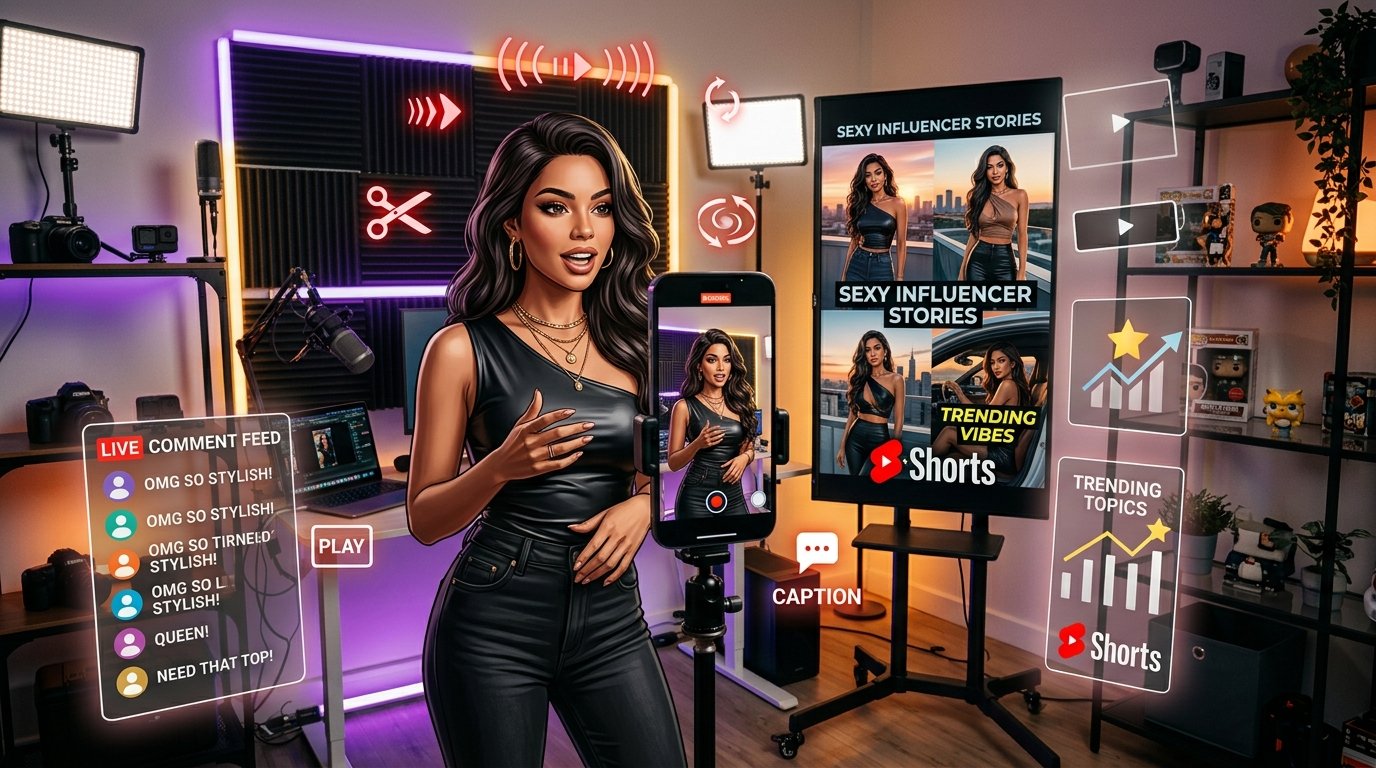
How YouTube Shorts Storytelling Captures Attention Fast – YouTube Shorts has changed the way creators approach video storytelling. With viewers scrolling through a continuous stream of short-form content, creators have only a limited amount of time to make someone stop, watch, and stay until the end.
This environment has created a new form of storytelling. Traditional videos can spend several minutes developing characters, explaining context, or building suspense. Shorts storytelling requires creators to communicate an idea, create curiosity, and deliver a satisfying payoff within a much shorter format.
The challenge is not simply making a video shorter. Effective YouTube Shorts storytelling requires careful decisions about the opening, pacing, visuals, dialogue, structure, and ending.
For creators, understanding how attention works in short-form video can make storytelling more engaging and memorable.
Why Attention Matters on YouTube Shorts
Short-form video audiences are constantly exposed to new content. A viewer can quickly move from one video to another with a simple swipe.
This creates an extremely competitive environment for attention.
A creator may have a great story, but if the opening does not create enough curiosity, viewers may never discover what happens next.
The first moments of a Short therefore have an important job. They need to establish a reason for the viewer to continue watching.
This does not necessarily mean using exaggerated claims or clickbait. A strong opening can simply introduce an unusual situation, an intriguing question, a surprising visual, or a problem that viewers want to see resolved.
Start With a Strong Hook
The hook is one of the most important elements of Shorts storytelling.
A hook introduces the central reason someone should keep watching.
For example, instead of beginning with a long introduction, a creator might start with:
“Everything was normal until this happened.”
Or the video could immediately show the result of an unexpected event before explaining how it happened.
Visual hooks can be just as powerful as spoken hooks. A strange object, unusual location, dramatic reaction, or unexpected action can create immediate curiosity.
The best hooks usually create an information gap. Viewers understand enough to become interested but do not yet know the complete answer.
That unanswered question encourages them to continue watching.
Get to the Point Quickly
Short-form storytelling does not leave much room for unnecessary introductions.
Creators should identify the core story and remove information that does not contribute to it.
For example, if a Short tells the story of discovering an unusual restaurant, spending several seconds introducing the creator may delay the moment that actually interests viewers.
Instead, the story could begin with the discovery itself.
This principle can be summarized as: enter the story as late as possible.
Every second should contribute something meaningful, whether it introduces information, develops the situation, increases tension, or prepares the viewer for the payoff.
Use a Simple Story Structure
Even very short videos can benefit from a basic narrative structure.
One effective format is:
Hook → Setup → Conflict → Escalation → Payoff
The hook captures attention.
The setup gives viewers enough context to understand what is happening.
The conflict introduces a problem, challenge, mystery, or unexpected development.
The escalation makes the situation more interesting.
The payoff provides the conclusion or reveals the answer.
Not every Short needs all five elements in exactly this order, but the structure can provide a useful framework.
For example, a creator might begin by showing an unusual object, explain where it came from, reveal why it matters, increase curiosity through additional clues, and finish with the surprising explanation.
Create Curiosity Gaps
Curiosity is one of the strongest tools available to short-form storytellers.
A curiosity gap occurs when viewers know enough about a situation to become interested but not enough to understand the outcome.
Questions naturally create this effect.
“What happened next?”
“Why was this abandoned?”
“How did they build this?”
“What’s inside?”
“Why does everyone avoid this place?”
These questions encourage viewers to continue because the brain wants closure.
However, creators should make sure the promised answer actually appears in the video. If the opening creates curiosity but the ending does not deliver, viewers may feel disappointed.
Use Visual Storytelling
Short-form video is highly visual, so creators should avoid relying entirely on narration.
Images, movement, text overlays, close-ups, reactions, transitions, and environmental details can communicate information quickly.
For example, instead of saying that a room is extremely small, show the person struggling to move inside it.
Instead of explaining that an object is old, show its damaged surface and unusual details.
Visual evidence often communicates information faster than spoken explanation.
This is particularly important when viewers are watching without sound.
Keep the Pacing Dynamic
Pacing determines how quickly a story moves from one moment to another.
If a Short feels slow, viewers may swipe away. If it moves too quickly, viewers may become confused.
The goal is controlled pacing.
Different parts of the story can have different speeds. The opening may move quickly, while an important reveal may slow down briefly to create anticipation.
Editing can help control pacing through cuts, camera movement, zooms, transitions, and changes in visual composition.
Creators should avoid adding transitions simply because they look impressive. Every editing choice should support the story.
Use Pattern Interrupts
A pattern interrupt is a change that breaks visual or narrative predictability.
Examples include changing camera angles, introducing a new visual, switching locations, changing the music, using an unexpected reaction, or suddenly revealing new information.
Pattern interrupts can help maintain attention during longer Shorts.
However, they should feel natural. Too many sudden changes can make a video exhausting or confusing.
A good pattern interrupt gives viewers a reason to re-engage without distracting them from the story.
Build Toward a Payoff
A story needs a reason to continue.
The payoff is the moment when the central question is answered, the problem is resolved, or the audience receives an unexpected result.
Strong payoffs can take many forms.
A mystery can be explained.
A prediction can be confirmed or disproved.
A challenge can reach its result.
A transformation can be revealed.
A surprising fact can change the viewer’s understanding of what happened.
The payoff should feel connected to the setup. If the ending has nothing to do with the story established at the beginning, the video may feel incomplete.
Use Text Strategically
Text overlays can strengthen storytelling by emphasizing important information.
They are particularly useful when viewers watch without audio.
Short phrases are usually more effective than large blocks of text.
Instead of placing an entire paragraph on screen, highlight the key idea.
For example:
“Three hours later…”
“Nobody expected this.”
“Then everything changed.”
Text can also help viewers follow a sequence of events.
However, captions and overlays should not cover important visual elements or make the screen difficult to understand.
Sound and Music Matter
Audio can significantly influence the emotional impact of a Short.
Music can create excitement, suspense, humor, tension, or emotion.
Sound effects can emphasize important moments. A sudden sound can make a reveal feel more dramatic, while quieter audio can create anticipation.
Voice delivery also matters.
A narrator who speaks with energy and variation can make even simple information more engaging. Speaking too quickly can make the video difficult to follow, while speaking too slowly can reduce momentum.
Good audio design should support the story rather than overpower it.
Make Every Scene Serve a Purpose
Short-form storytelling rewards efficiency.
Creators should ask whether every scene contributes to the viewer’s understanding or emotional experience.
If removing a shot does not change the story, it may not need to be there.
This does not mean every second must contain dramatic action. Quiet moments can be valuable when they create contrast or anticipation.
The important thing is intentionality.
A few carefully selected shots can tell a stronger story than dozens of unrelated clips.
Create Emotional Connection
Attention is not only driven by curiosity.
Emotion can also keep viewers engaged.
Stories involving surprise, humor, fear, inspiration, nostalgia, excitement, or empathy can become more memorable.
Even simple everyday experiences can become compelling when they contain a relatable emotional element.
For example, a Short about learning a difficult skill becomes more interesting when viewers see the creator struggle, fail, improve, and eventually succeed.
The audience is not simply watching an outcome. They are experiencing the journey.
Use Relatable Characters
A strong character can make a short story more engaging.
The character does not need a complicated background. Viewers simply need to understand what the person wants, what problem they face, or why the situation matters.
Creators can also use themselves as the central character.
Showing genuine reactions can make a video feel more authentic.
When viewers feel connected to the person on screen, they have another reason to continue watching.
Experiment With Story Formats
There is no single formula for successful Shorts.
Creators can experiment with different formats, including:
- Mini documentaries
- Personal stories
- Before-and-after transformations
- Challenges
- Tutorials with a narrative structure
- Unexpected discoveries
- Behind-the-scenes stories
- Historical facts
- Mystery-based storytelling
- Comedy sketches
- Product experiments
- Day-in-the-life stories
Testing different structures can help creators discover which formats resonate with their audiences.
Study Audience Retention
Creators should not rely entirely on intuition.
Analytics can provide valuable information about how viewers respond to videos.
Audience retention data can help identify where viewers stop watching.
If many viewers leave during the opening, the hook may need improvement.
If viewers remain engaged until the middle but leave before the ending, the story may lack momentum.
If viewers consistently watch through the final moments, the structure may be working effectively.
Analytics should not be treated as a perfect formula. Instead, they provide clues that can guide future experiments.
Avoid Clickbait That Breaks Trust
Strong hooks are valuable, but misleading viewers can damage long-term audience trust.
A title, opening statement, or visual should accurately represent the story that follows.
Creators can create curiosity without making false promises.
For example, instead of claiming something impossible happened, present the genuine mystery or unexpected result.
Trust becomes particularly important when creators want viewers to return repeatedly.
Encourage Rewatching
Some Shorts become more effective when viewers watch them multiple times.
Complex visual details, fast reveals, hidden information, clever transitions, or surprising endings can encourage rewatching.
However, creators should not intentionally make content confusing simply to increase replay behavior.
A better strategy is to create videos that reward careful attention.
When viewers discover something new on a second viewing, the content can become more memorable and shareable.
End With a Strong Final Moment
The ending deserves as much attention as the opening.
A weak ending can make an otherwise strong story feel unfinished.
The final moment could reveal the answer to the central question, deliver a joke, show the final result, or provide a meaningful conclusion.
Creators can also use the ending to encourage discussion naturally.
A question related to the story can invite viewers to share their opinions.
The best calls to action feel connected to the content rather than interrupting it.
The Future of Shorts Storytelling
Short-form video storytelling will likely continue evolving as audiences become more accustomed to rapid visual communication.
Creators are experimenting with increasingly sophisticated editing, interactive storytelling, artificial intelligence tools, cinematic techniques, and new narrative formats.
At the same time, the fundamentals remain relatively simple.
People want to know what happens next.
They want to understand why something matters.
They want to experience emotion, surprise, humor, or discovery.
Technology can improve production quality, but strong storytelling remains the foundation.
Conclusion
YouTube Shorts storytelling captures attention quickly by combining strong hooks, concise narratives, visual communication, dynamic pacing, curiosity, emotion, and satisfying payoffs.
The most effective creators understand that short videos are not simply long videos compressed into a smaller format. They require a different approach to storytelling.
Every moment matters. The opening needs to create curiosity, the middle needs to maintain momentum, and the ending needs to deliver a meaningful payoff.
By experimenting with different formats, studying audience behavior, improving editing techniques, and focusing on authentic stories, creators can develop Shorts that encourage viewers to stop scrolling and start watching.
Ultimately, successful Shorts storytelling is about respecting the viewer’s limited attention while giving them a compelling reason to stay until the very end.